jeudi 6 août 2026

INSOLITE

 https://thecradle.co/articles/pentagon-orders-us-troops-to-devise-creative-options-for-punishing-iran-report

Le Pentagone demande aux troupes américaines de concevoir des « options créatives » pour « punir l'Iran » : rapport

Le rapport indique que les responsables militaires ont reconnu que la stratégie américaine devait être révisée et que les frappes récentes n'avaient pas été suffisamment efficaces.

Service de presse

3 août 2026


L'armée américaine a demandé à ses forces de concevoir des options et des plans d'attaque « créatifs et non conventionnels » visant à « punir » la République islamique d'Iran, selon un reportage exclusif de CNN publié le 3 août.


Le message a été rédigé par un officier du service de renseignement du Commandement central américain (CENTCOM) et envoyé à des analystes militaires, selon une source bien informée.

Dans un courriel obtenu par CNN, un officier supérieur de l'armée américaine a déclaré : « Nous recherchons des moyens nouveaux, créatifs et non conventionnels de faire pression sur l'Iran et de le punir. »

« Un haut gradé de l’armée américaine a envoyé ce message la semaine dernière, sollicitant de nouvelles idées sur la manière de gérer la situation avec l’Iran », a ajouté une deuxième source. 

Le rapport qualifiait le message de « requête de type crowdsourcing », ce qui, selon des responsables militaires cités par CNN, est « inhabituel par courriel ».

Elle a ajouté que cela était un « signe des options limitées – et potentiellement désagréables – dont dispose [le président américain Donald] Trump pour forcer l’Iran à conclure un accord à ses conditions ».

Afin de trouver une solution alternative, le responsable du CENTCOM a lancé une « séance de brainstorming » par courriel afin de « voir si quelqu'un avait une meilleure idée ».

Le rapport souligne que le CENTCOM examine toutes les options et reconnaît la nécessité de réévaluer sa stratégie dans la guerre contre l'Iran, qui n'a pas permis d'atteindre les objectifs de Washington et de Tel Aviv.

Des sources ont indiqué à CNN que même les armes conventionnelles les plus sophistiquées et la poursuite des frappes de missiles et de bombes n'ont probablement aucun impact. 

Les installations iraniennes sont enfouies profondément sous terre, et de nombreux rapports indiquent que Téhéran a réussi à rétablir rapidement les sites militaires ciblés après qu'ils aient été touchés par des attaques américano-israéliennes.

« Pour les détruire, les États-Unis devraient probablement recourir à des troupes au sol – un risque énorme que Trump a refusé de prendre – compte tenu des questions soulevées quant à la transparence de son administration concernant les pertes militaires », poursuit le rapport, ajoutant que 18 militaires américains ont été tués par les opérations de représailles de la République islamique. 

« Au final, le président voudra un accord, donc il cherchera constamment des moyens de se montrer intransigeant et de sortir de cette impasse », a déclaré une source de CNN.

L'Iran a accueilli favorablement une invasion. Le ministre des Affaires étrangères, Abbas Araghchi, a déclaré que Téhéran attendait l'arrivée des troupes terrestres américaines et qu'un « désastre » les attendait si cette décision était prise. 

Des sources militaires iraniennes ont déclaré aux médias persans que les troupes terrestres américaines affronteraient un véritable enfer lors de toute offensive terrestre, que ce soit sur l'île de Kharg ou ailleurs. 

Au début du conflit, les troupes américaines ont lancé une opération présentée comme une tentative de sauvetage d'un pilote abattu en Iran. Le ministère iranien des Affaires étrangères et les médias ont tous deux affirmé que cette incursion était potentiellement une tentative ratée de vol d'uranium enrichi.

Les forces américaines ont subi de lourdes pertes, perdant plusieurs avions et faisant face à une résistance acharnée lors de l'opération de sauvetage présumée. 

Ce nouveau reportage de CNN a été publié quelques heures après que le président Trump a déclaré que les négociations entre les États-Unis et l'Iran étaient en cours et que Téhéran avait accepté de négocier et de parvenir à un accord.


L'Iran a réitéré son démenti concernant toute négociation en cours avec Washington. 


« Les États-Unis sont prêts à riposter contre l’Iran avec une force militaire et une puissance inégalées depuis la Seconde Guerre mondiale. Malgré cela, l’Iran et d’autres pays viennent de nous demander de renoncer à toute attaque, un accord ayant été conclu sur les termes de l’accord », a déclaré Trump.

« Cela inclurait l’OUVERTURE immédiate, complète et totale du détroit d’Ormuz et la fin de la menace nucléaire iranienne… J’ai accepté, pour le bien futur du MONDE et… la survie d’un Iran prospère et florissant, d’annuler l’attaque, sous réserve de la conclusion rapide d’un ACCORD », a-t-il ajouté. 

Le président américain a également affirmé qu'Israël soutenait son approche, malgré les déclarations publiques des responsables israéliens exprimant leur désir de reprendre les attaques contre l'Iran dès que possible. 

Washington a intensifié ses bombardements sur l'Iran pendant plusieurs semaines le mois dernier. Téhéran a riposté par des attaques massives et destructrices contre des bases militaires américaines dans toute la région, infligeant de lourdes pertes aux troupes américaines.


Trump a suspendu sa campagne il y a quelques jours, affirmant que des médiateurs demandaient une désescalade. Selon les médias américains , cette suspension est intervenue après que l'armée a informé Trump de l'inefficacité des frappes. 

Durant cette pause, l'Iran a lancé une attaque surprise contre des sites américains en Jordanie , ce qui a incité Trump à proférer des menaces violentes contre Téhéran. 

L'armée iranienne affirme qu'elle détruira tous les biens américains restants dans la région si les menaces répétées de Washington de bombarder des ponts et des centrales électriques iraniennes sont mises à exécution.

**************

Ceci , et ce qui s'affiche sur mon écran


mercredi 5 août 2026

Les échecs ukrainiens sur le champ de bataille poussent l'Europe à des mesures désespérées

https://www.youtube.com/watch?v=9T9hMiUR50g


6 août 2026 

 00:00:00 Fin de la campagne de 40 jours
00:00:49 Résultat de la campagne : désastre 
00:02:58 Début des percées russes 
00:03:30 Blocus de la mer Noire, l'Ukraine enclavée 
00:04:01 Zaluzhny déclare qu'il faut oublier l'OTAN 
00:07:47 L'accord sur les missiles Patriot s'effondre 
00:08:18 Échec du plan Starlink et Star Shield 
00:09:08 Les efforts de l'Europe pour un cessez-le-feu 
00:14:00 Brouillage de Starlink par la Russie 
00:16:15 Quels pays envoient des troupes ?


Alcool et démence

 https://articles.mercola.com/sites/articles/archive/2026/08/05/alcohol-and-dementia-risk.aspx?

https://lezarceleur-blogspot-com.translate.goog/2026/08/alcool-et-demence.html?_x_tr_sl=hl&_x_tr_tl=fr&_x_tr_hl=fr

Alcohol Raises Dementia Risk at Every Level of Drinking

Analysis by Dr. Joseph Mercola. 5 août 2026

Story at-a-glance

  • A study found that alcohol raises dementia risk at every level of drinking, overturning decades of claims that moderate use protects your brain
  • Even light drinking damages neurons, disrupts mitochondrial energy production, and accelerates brain aging, showing there is no safe dose for cognitive health
  • Genetic data revealed that for every measurable increase in alcohol consumption, dementia risk rose by about 15%, with the danger extending across all age and ancestry groups
  • Alcohol and linoleic acid (LA) from seed oils follow the same toxic pathway in your liver, creating harmful aldehydes that cause mitochondrial damage and fatty liver disease, both of which impair brain function
  • Reducing or eliminating alcohol and cutting seed oils to under 5 grams per day — ideally 2 grams — support liver recovery, restore mitochondrial function, and protect long-term brain health
  • For decades, people have been told that a glass of wine a day protects your brain. That belief is now collapsing under the weight of new evidence. A comprehensive study — tracking more than half a million adults across the U.S. and United Kingdom — shows that alcohol harms your brain at every level of consumption.1

    Dementia is a progressive disease that steals memory, reasoning, and independence. While genetics and aging play a role, lifestyle factors are increasingly recognized as major drivers — and alcohol use stands out as one of the most damaging. Even light drinking is now linked to measurable brain injury.

    Instead of protecting cognition, alcohol impairs mitochondrial energy production, damages neurons, and accelerates the biological aging process that leads to dementia. The truth is simple: there’s no safe amount of alcohol when it comes to preserving your brain. This evidence marks a major shift in understanding — one that replaces decades of wishful thinking with hard data.

    Genetic Evidence Confirms That Every Drink Raises Dementia Risk

    For a study published in BMJ Evidence-Based Medicine, researchers analyzed data from 559,559 adults aged 56 to 72 to uncover how drinking affects long-term brain health.2 These participants were followed for up to 12 years, with 14,540 developing dementia during the study.

    The research combined traditional observational data with a genetic method that uses people’s DNA to reveal whether a behavior actually causes disease rather than just correlates with it. This powerful approach allowed scientists to separate cause from coincidence.

    The findings overturned decades of public health messaging — Earlier studies had suggested a U-shaped curve — meaning moderate drinkers supposedly had lower dementia risk than both heavy drinkers and abstainers. This analysis proved that pattern was misleading.

    When genetic data were included, the U-shape flattened into a straight, upward slope: the more alcohol people consumed, the higher their dementia risk became. Light drinking offered no protection at all. Alcohol is not a nutrient or a tonic. It’s a neurotoxin that gradually undermines memory, mood, and cognition.

    Researchers found that every level of drinking increased risk — Using genetic proxies for lifetime alcohol intake, they discovered that for every standard deviation increase in drinks per week — a statistical term meaning a measurable rise in consumption — dementia risk rose by 15%.

    Even small increases in alcohol use disorder prevalence, such as a twofold rise, led to a 16% higher risk of developing dementia. This means that even a few extra drinks a week have measurable consequences on your brain health.

    The illusion of safety in moderate drinking was caused by reverse causation — People in early stages of dementia often begin drinking less as their brain function declines. When studies compared them with healthy moderate drinkers, it looked like those who drank lightly were healthier — but in reality, their lower risk had nothing to do with alcohol.

    It was simply that those already showing symptoms of cognitive decline had stopped drinking. This false signal distorted decades of research and led millions to believe that moderate alcohol intake was harmless, even beneficial.

    The research also revealed who is most at risk — Across European, African, and Latin American ancestry groups, those with alcohol use disorder consistently showed elevated dementia rates. People drinking more than 40 drinks per week faced the steepest risk, but even those drinking far less weren’t exempt. In both men and women, genetic risk for heavier drinking predicted higher dementia incidence, demonstrating that the danger spans all populations.

    Alcohol’s Brain Effects Have Far-Reaching Public Health Implications

    Based on their findings, the scientists estimated that cutting alcohol use disorder rates in half could lower dementia cases by roughly 16% globally. This doesn’t just apply to people with heavy drinking habits — it means that any reduction in alcohol intake, even among light drinkers, could meaningfully protect brain health. This translates into a simple yet powerful form of prevention: every skipped drink matters.

    Even occasional drinking poses measurable risks — The idea that “just a glass or two” is harmless doesn’t hold up under genetic scrutiny. Every sip increases the burden of oxidative stress and neuronal injury. Alcohol’s impact is cumulative, meaning that damage adds up over years, not weeks.

    This makes it especially dangerous for younger adults, who may not notice effects until midlife. The findings strongly suggest that if you want to preserve your mental clarity into older age, lowering or eliminating alcohol is one of the most effective steps you can take.

    Your choices today shape your cognitive future — Whether you drink socially, occasionally, or regularly, this research shows that the dose-response curve for alcohol and dementia risk has no safe zone.

    The higher the intake, the greater the damage. If you’ve believed that “a little” alcohol supports health, it’s time to rethink that narrative. Your brain’s longevity depends on protecting its cells from preventable harm — and alcohol is now proven to be a direct and avoidable threat.

    Alcohol and Linoleic Acid Follow the Same Toxic Pathway in Your Liver

    mechanism mitochondrial toxicity induced la ethanol

    It’s not only your brain that’s at risk from excess alcohol — your liver is also affected. While most people know alcohol destroys your liver, few realize that linoleic acid (LA) — the primary polyunsaturated fat found in seed oils — is just as damaging once it’s metabolized.

    Alcoholic fatty liver disease and nonalcoholic fatty liver disease (NAFLD) share the same root problem: mitochondrial injury. Whether that damage comes from ethanol in beer and wine or from LA in salad dressings, fried foods, and processed snacks, the result is the same — fat builds up in your liver because your cells can’t make energy efficiently anymore.

    LA causes mitochondrial dysfunction just like alcohol — When you drink, your liver converts ethanol into acetaldehyde, a toxic aldehyde that damages cell membranes and DNA. LA follows an almost identical route. As LA breaks down, it forms another toxic aldehyde called 4-hydroxynonenal (4-HNE).

    Both acetaldehyde and 4-HNE are highly reactive molecules that attach themselves to proteins, phospholipids, and mitochondrial DNA, disrupting your body’s ability to generate adenosine triphosphate (ATP) — the molecule your cells use for energy. Without sufficient ATP, your liver loses its ability to oxidize fats properly, leading to fat accumulation and inflammation. This process sets the stage for fatty liver disease, regardless of whether alcohol is involved.

    Modern diets make the problem worse — Decades ago, most dietary fats came from animal sources like grass fed butter, ghee, and tallow — fats that are chemically stable and don’t oxidize easily. Today, seed oils like soybean, corn, safflower, sunflower, and canola dominate the food supply. These oils are rich in LA, which oxidizes rapidly during cooking and processing, creating 4-HNE even before you take your first bite.

    Once in your system, these oxidized fats add to the oxidative load on your liver, accelerating the same type of mitochondrial dysfunction caused by alcohol abuse. It’s one reason fatty liver disease has become one of the fastest-growing metabolic disorders — even among people who never drink.

    The damage is reversible when you remove the source — Your liver has a remarkable capacity to heal once the toxic load is lifted. Both abstaining from alcohol and lowering your LA intake help reverse fatty liver disease.

    The key is to give your mitochondria a chance to recover and restore normal ATP production. This means eliminating not only alcohol but also the hidden sources of seed oils that appear in nearly every processed or restaurant food — from salad dressings and sauces to protein bars and roasted nuts.

    How to Protect Your Brain and Lower Dementia Risk

    If you’ve believed that a little alcohol was harmless — or even good for you — it’s time to rethink that idea. The evidence now shows that every drink raises your risk of brain damage over time.

    Dementia doesn’t happen overnight. It’s the result of repeated injury to your neurons, your mitochondria, and the delicate networks that control memory and emotion. Fortunately, you have full control over two of the biggest risk factors: alcohol and LA. What you do starting today determines how sharp your mind will stay decades from now.

    1. Cut out alcohol completely — The most direct way to protect your brain is to stop drinking altogether. If you’re a social drinker, start by tracking how often and how much you drink each week. Set a clear limit and commit to cutting it in half, then stopping completely. Your liver, heart, and brain begin repairing themselves within days of stopping alcohol exposure. Think of each skipped drink as an investment in future memory, focus, and emotional stability.

    2. Eliminate seed oils and processed foods — Alcohol isn’t the only threat to your brain and liver — seed oils are just as destructive once metabolized. LA in seed oils follows the same toxic pathway as alcohol. To protect your brain, remove the main dietary sources of LA: vegetable oils like soybean, corn, canola, sunflower, safflower, and cottonseed. Replace them with stable, natural fats such as grass fed butter, ghee, and tallow.

    Keeping your LA intake below 5 grams (g) per day — and ideally under 2 g — helps reverse mitochondrial stress and supports both liver and brain recovery. To monitor your intake, I recommend you download the Mercola Health Coach app, which will be released this year. It contains a useful feature called the Seed-Oil Sleuth, which will calculate your LA intake to the tenth of a gram from the food you eat.

    3. Use N-acetylcysteine (NAC) before occasional drinking If you still choose to have an occasional drink, protect yourself with NAC. This compound supports your liver in neutralizing acetaldehyde — the toxic byproduct that damages DNA and brain tissue. A dose of at least 200 milligrams (mg) taken about 30 minutes before drinking helps your body process alcohol more efficiently and limits oxidative stress. Pair it with vitamin B1 (thiamine) and B6 for added protection.

    4. Feed your mitochondria the right fuel — Both alcohol and excess LA interfere with mitochondrial energy production. You restore it by giving your body the nutrients it actually needs for energy. Focus on a diet rich in healthy carbohydrates, around 250 g per day for most adults. These carbs support steady glucose delivery to your brain, your most energy-hungry organ.

    5. Replace alcohol’s role with something life-giving — Many people drink to relax, to connect, or to escape. Replace that habit with activities that actually rebuild your brain. Walking, dancing, or exercising outdoors releases dopamine naturally and enhances neuroplasticity — your brain’s ability to form new connections.

    If you miss the ritual of winding down, try herbal teas like chamomile or lemon balm, or nonalcoholic drinks made with adaptogens such as ashwagandha. Within a few weeks, you’ll notice your sleep improving, your focus sharpening, and your stress levels dropping.

    You don’t need to wait for symptoms to appear to take action. Alcohol and LA work through the same toxic mechanisms, harming your liver first and your brain soon after. The damage is cumulative — but it’s also reversible. Every drink you skip and every seed oil you cut is a step in the right direction for your mitochondria. The sooner you make these changes, the longer your mind stays clear, your energy steady, and your personality intact.

    FAQs About Alcohol and Dementia Risk

    Q: Does moderate drinking protect your brain or lower dementia risk?

    A: No. A BMJ Evidence-Based Medicine study, which tracked 559,559 adults, showed that alcohol increases dementia risk at every level of consumption.3 Earlier claims of protection came from flawed studies that failed to account for “reverse causation” — the fact that people with early cognitive decline tend to drink less, creating a false appearance of benefit.

    Q: How exactly does alcohol damage my brain?

    A: Alcohol acts as a neurotoxin. Once consumed, it disrupts mitochondrial function — the process your brain cells use to generate energy — while producing toxic byproducts such as acetaldehyde. These compounds inflame and damage neurons, accelerate oxidative stress, and impair your brain’s ability to repair itself. Over time, even light drinking speeds up the aging process of your brain, increasing dementia risk.

    Q: What’s the link between alcohol and liver disease — and how does LA fit in?

    A: Both alcohol and LA in seed oils follow the same toxic metabolic pathway in your liver. Alcohol turns into acetaldehyde, while LA breaks down into 4-HNE — both are highly reactive aldehydes that injure mitochondria and block fat metabolism. The result is fat buildup in your liver, inflammation, and mitochondrial dysfunction, which also contribute to brain degeneration.

    Q: How can I protect my brain and liver from this kind of damage?

    A: The most effective steps are to eliminate alcohol completely and drastically reduce your intake of LA. Replace vegetable oils like soybean, corn, and canola with natural fats such as grass fed butter, ghee, and tallow. Keeping your daily LA intake below 5 g — and ideally under 2 g — reduces mitochondrial stress and helps restore energy production in your brain and liver.

    Q: Are there supplements or habits that help reverse the damage?

    A: Yes. NAC helps neutralize acetaldehyde and boosts glutathione, your body’s master antioxidant. Taking about 200 mg of NAC before drinking offers partial protection. Supporting detoxification with sulfur-rich foods like pastured eggs and onions, getting daily sunlight, and staying active all help mitochondria recover. Over time, these changes restore cognitive clarity, energy, and resilience.

  • - Sources and References

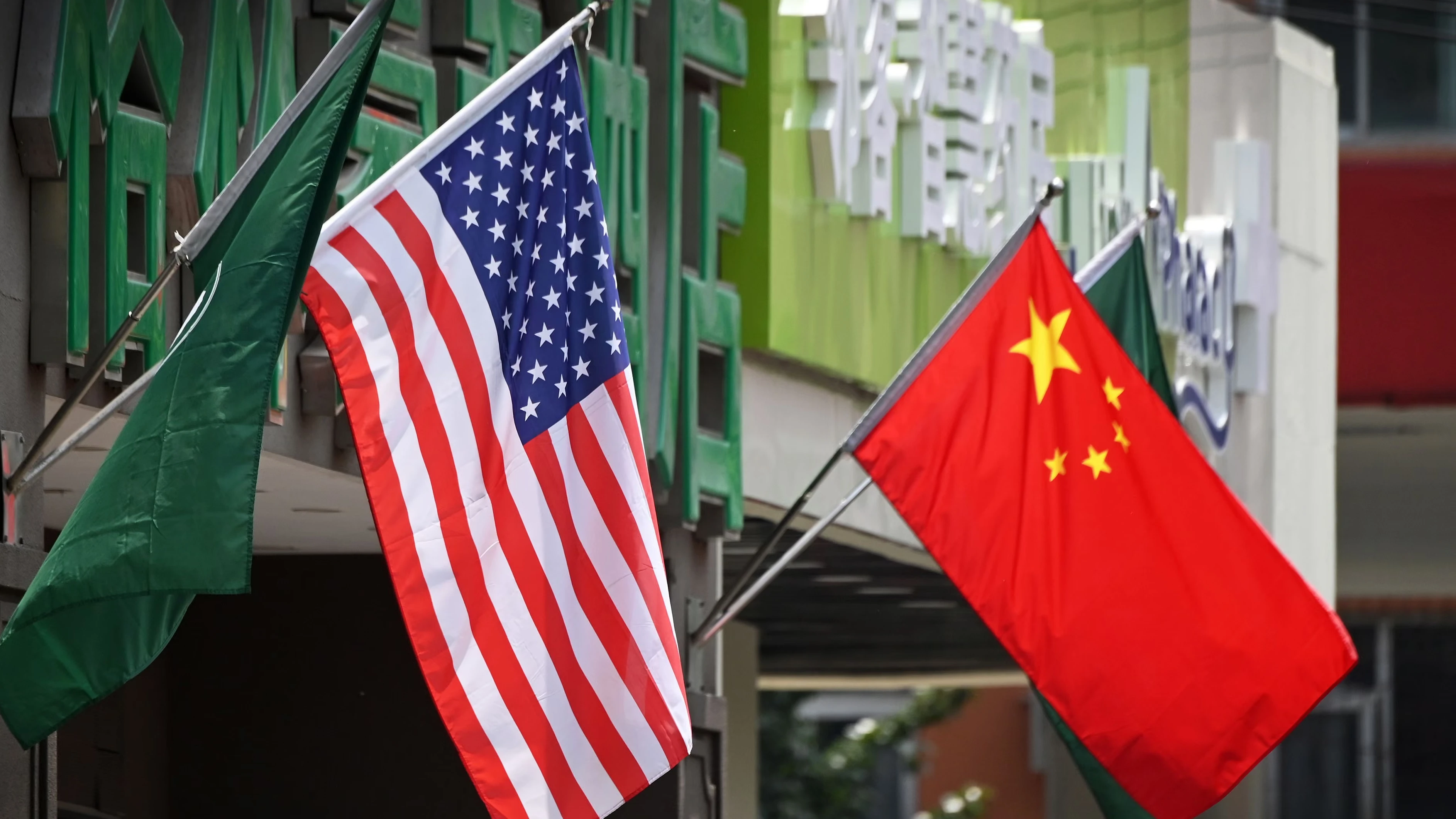
La Chine riposte aux interdictions commerciales américaines par des restrictions sur les drones et des sanctions.

 https://thecradle.co/articles/china-retaliates-against-us-trade-bans-with-drone-curbs-sanctions

Pékin exige que Washington revienne sur ses mesures précédentes, menaçant de représailles supplémentaires si la pression persiste. 

(Crédit photo : Greg Baker/AFP via Getty Images)

Le ministère chinois du Commerce a annoncé le 5 août que les drones, leurs composants clés et les technologies connexes destinés aux États-Unis feraient l'objet d'un examen rigoureux au cas par cas, dans le cadre d'un ensemble de contre-mesures imposées récemment par les États-Unis en matière de commerce et de technologie aux entreprises et aux produits chinois. 

Le ministère a indiqué que les contrôles entraient en vigueur immédiatement, affirmant qu'ils étaient nécessaires pour préserver la sécurité nationale et respecter les engagements internationaux de la Chine en matière de non-prolifération. 

Les contrôles ne vont pas jusqu'à une interdiction pure et simple, mais les expéditions relevant des règles chinoises d'exportation de biens à double usage perdent leur procédure d'autorisation accélérée et doivent être dédouanées individuellement, ce qui pourrait ralentir les livraisons.

Pékin a également interdit à des organisations et à des individus chinois de faire affaire avec sept entités américaines, dont six étaient visées par le soutien aux sanctions américaines relatives au Xinjiang, une conduite que le ministère a qualifiée d'odieuse. 

La septième entreprise, Compliance Testing LLC, basée à Mesa, a été mise sur la liste pour avoir aidé la Commission fédérale des communications (FCC) à mettre en œuvre des mesures que Pékin considère comme menaçantes pour sa souveraineté, sa sécurité et ses intérêts de développement. Les ordonnances ne mentionnaient ni gel d'avoirs ni interdiction de voyager.

Pékin a également suspendu les inspections d'usines menées par des organismes américains dans le cadre du système de certification obligatoire chinois. Par ailleurs, une enquête de sécurité nationale a été ouverte concernant les importations de matériel d'impression et de bureau – la première menée en vertu de la loi révisée sur le commerce extérieur. 

Ces nouvelles restrictions font suite à une série de mesures américaines plaçant sur liste noire des entreprises chinoises et interdisant les importations de technologies étrangères dans des secteurs dominés par la Chine. 

Le 31 juillet, Washington a ajouté plus de 40 entreprises chinoises à sa liste d'entités visées par la loi sur la prévention du travail forcé des Ouïghours, couvrant des secteurs allant de l'alimentation et du coton aux produits pharmaceutiques, aux métaux et au lithium. 

La FCC a interdit les importations d'appareils robotiques et d'onduleurs de fabrication étrangère, deux secteurs dominés par les entreprises chinoises, après avoir interdit en décembre les nouveaux modèles de drones de fabrication étrangère.

Le ministère du Commerce a qualifié ses contre-mesures de mesurées, affirmant que Pékin attachait une grande importance à la stabilité atteinte dans les relations économiques et commerciales ces derniers mois. 

Elle a exigé que Washington revienne immédiatement sur ses mesures et a averti que la Chine prendrait des mesures de représailles supplémentaires si les États-Unis persistaient dans leur décision d'imposer de nouvelles restrictions. 

Ces mesures font suite à une  série de contre-mesures similaires prises en juin. Le 22 juin, Pékin a inscrit dix entités américaines sur sa liste de contrôle des exportations, interdisant l'exportation de biens à double usage vers ces entités et prohibant à quiconque, quel que soit son pays d'origine, le transfert de biens à double usage d'origine chinoise vers les entreprises figurant sur cette liste. 

Le ministère chinois des Finances a annoncé des mesures distinctes à l'encontre de 46 entreprises américaines, principalement des sous-traitants du secteur de la défense, dans le cadre des marchés publics. 

Cette décision fait suite à l'élargissement, mi-juin, par le Pentagone, de sa liste noire d'entreprises militaires chinoises, qui a ajouté 65 entités, dont Alibaba et Baidu. 

Selon une analyse d'EY-Parthenon, les États-Unis et l'Europe devraient dépenser  23 600 milliards de dollars supplémentaires sur 25 ans pour mettre fin à leur dépendance à l'égard de la Chine dans les industries critiques. Cette analyse révèle que l'Occident resterait dépendant des terres rares chinoises même après cet investissement.

Selon Chatham House, la Chine produit environ 70 % des terres rares mondiales et assure quelque 90 % du traitement des terres rares lourdes, laissant ainsi les États-Unis et l'Europe vulnérables dans les secteurs de l'automobile, de l'électronique et de la fabrication d'armes. 

Trump vu par Pr Rodrigue Tremblay

 https://www.globalresearch.ca/trump-more-corrupt-dangerous-than-some-corporate-media-portray/5935594?

https://lezarceleur-blogspot-com.translate.goog/2026/08/trump-vu-par-pr-rodrigue-tremblay.html?_x_tr_sl=hl&_x_tr_tl=fr&_x_tr_hl=fr

US President D. Trump is Far More Corrupt and Dangerous than Some Corporate Media Portray Him


Prof Rodrigue Tremblay, Global Research, 4 août 2026

“A whole civilization will die tonight, never to be brought back again. I don’t want that to happen, but it probably will.” –Donald Trump (1946- ), American President (2017-2021 and 2025- ), (in an infamous statement on the morning of Tuesday, April 7, 2026)

“The first time (first term), I had two things to do – run the country and survive; I had all these crooked guys. And the second time (second term), I run the country and the world.”  —Donald Trump (1946- ), American President (2017-2021 and 2025- ), (in the interview in the Atlantic, “I run the country and the world”, published on April 28, 2025)

“If he thinks he’s going down, he’s going to try to take the rest of us down with him.” —Mary Trump  (1965- ), American psychologist and Donald Trump’s niece, author of the book ‘Too Much – Never Enough: How my family created the world’s most dangerous man‘. (in a YouTube interview, on November 6, 2020)

Since taking the oath of office of U.S. president for the second time, on January 20, 2025, real estate magnate Donald Trump (1946- ) has demonstrated to anybody who is moderately informed, that he is not your ordinary politician. It is well documented that he is, by far, the most corrupt and the most incompetent American president that the United States has ever had.

This is beyond the fact that he has serious character flaws and vices, such as his dictatorial, confrontational, bullying and manipulative temperament, which should normally have disqualified him to occupy a high public function.

Moreover, for Donald Trump, lying has become a sick obsession. He is a politician who lies, not just occasionally, but constantly, in his daily rants. This allows him to live in a childish fantasy world. In his mind, rejections are acceptances, failures are successes, and disasters are achievements. That makes him untrustworthy, to say the least.

For a head of government, or any leader for that matter, who loses touch with reality, this is a major flaw that can only have tragic consequences. In his case, what makes it very dangerous is when he distorts reality and invents serious accusations and claims, which are nothing but pure allegations or fabrications, and that are, for the most part, devoid of any logic, justification, or proof.

Because intellectual corruption often precedes financial corruption, this may explain why D. Trump does not have much respect for the U.S. Constitution, and why he is allegedly perceived as violating often his oath of office, which he took in 2017 and in 2021:

“I do solemnly swear that I will faithfully execute the Office of President of the United States, and will to the best of my ability, preserve, protect and defend the Constitution of the United States” (Article II, Section One, Clause 8).

Therefore, by now, a majority of Americans know that real estate magnate and authoritarian politician D. Trump is lacking in intellectual honesty and in financial integrity. He is a bare-knuckled extortionist, who is ruthless in pursuing his private and family interests by relying openly on the old trick of “pay to play“.

Moreover, D. Trump has used various deflection tactics to refuse to abide by a law passed nearly unanimously by Congress, in December 2025, (the Epstein Files Transparency Act), to make public all the so-called un-redacted Epstein files and the scandals they contain, (despite his 2024 election campaign promises to do so!)

Trump’s cover-up means to keep secret his long involvement with the scandalous J. Epstein international pedophile sex ring, which made more than 1000 teen-aged girls, from many countries, victims of such a racket. This could possibly include other alleged examples of sexual misconduct, on his part.

I. A New Book Reveals the Portrait of Donald Trump and His Authoritarian and Dysfunctional Administration 2.0

On June 23, 2026, two experienced New York Times reporters, Maggie Haberman and Jonathan Swan, published a blockbuster book about Trump’s many horrors and insanities in his second term imperial presidency. Entitled ‘Regime Change: Inside the Imperial Presidency of Donald Trump’, it is a book that every American voter should read before the coming November 3 midterm election.

Indeed, the 496-page book ‘Regime Change‘, published by Simon & Schuster, depicts in detail Donald Trump’s second term in power. This is a book that will be read by future historians, as describing a period “unprecedented-in-our-lifetime“, in the use of authoritarian and corrupt power, “and how he and a small group of people prepared for it, and the events that drove it“.

II. Donald Trump’s Staggering Corruption is Without Limits

The list of D. Trump’s egregious acts of corruption is limitless.

Image: Official portrait of Secretary of Commerce, Howard Lutnick (Public Domain)

One of Trump’s first corrupt decisions during and immediately after the 2024 election, was to accept hundreds of millions of dollars from super billionaires like Elon Musk, the Las Vegas Adelson family, and from many other super-wealthy donors.

Then D. Trump filled his administration and public agencies with oligarchs and people who had made large contributions to his Super Political Action Committees (PACS). For example, Trump appointed Howard Lutnick Secretary of Commerce, after the latter gave $9 million to a pro-Trump super PAC.

The dismantling and weaponizing of the independent U.S. Justice department

One of the most visible of Donald Trump’s acts of unprecedented political corruption is his destruction and weaponizing of the American Department of Justice, in naming his own personal lawyer in charge, and in turning that institution into his own instrument of political vindication and revenge.

In so doing, D. Trump put an end to the long tradition of keeping the Justice Department independent of the White House in cases of criminal investigations. He has led devastating attacks against the “rule of law” and against the long established principle that ‘nobody is above the law”, by indiscriminately firing most of the professional lawyers in the Justice Department, and other watchdogs, who were in charge of prosecuting cases of political corruption and waste. He also disbanded an FBI squad tasked with investigating congressional corruption and misconduct.

The attempts to create a huge ‘slush fund’ to help convicted supporters

Another most blatant corruption, among Trump’s hundreds of personal acts of political corruption, was his attempts to use taxpayers’ money to create a Justice Department’s ‘slush fund’ in the huge amount of $1.776 billion, to be used to help his supporters condemned by the courts, including 2021 Jan. 6 rioters. This was too much even for the most corrupt Republican members of Congress, who revolted.

The openly selling of Presidential pardons

Moreover, Donald Trump has gone full speed ahead to abuse a previously and sparsely used presidential constitutional prerogative to grant clemency to people convicted for cause.

In fact, he has allegedly engaged in selling multiple pardons to convicted criminals, including murderers, political donors and political allies, turning this process, according to observers, into an ‘industrial-scale’ corruption business of its own.

Trump has even named one person in the White House who is responsible to pressure rich individuals and companies to collect funds to finance his vanity projects, thus by-passing Congress.

III. D. Trump Has Violated the Emoluments Clause of the U.S. Constitution by Accepting Huge Gifts From Foreign Organizations and Donors

It is doubtful that Donald Trump has ever read or cared about the Emoluments Clause of the U.S. Constitution.

Indeed, there are specific constitutional provisions against accepting “bribes” (profits, advantages, payments for service or financial gains) while holding a public office in the United States federal government. The purpose is to prevent corruption, limit foreign influence on federal officers, and preserve a sitting president’s independence:

Foreign Emoluments Clause (art. I, Sec. 9, Par. 8):

“No Person holding any Office of Profit or Trust under [the United States], shall, without the Consent of the Congress, accept of any present, Emolument, Office, or Title, of any kind whatever, from any King, Prince, or foreign State.”

Further, there are reports that indicate that President Donald Trump is much more involved in unconstitutional conflicts of interest and much more corrupt than the corporate medias usually depict him. Donald Trump’s list of conflicts of interest and of corruption profits is incredibly long.

Click here to watch the video

One example, and not the least, is D. Trump’s blatant use of the complex cryptocurrencies financial industry, which he has nearly completely deregulated, to enrich himself, his family and some close friendly ‘deal-makers’, with billions of dollars of profits yearly, at the expense of credulous speculators.

Indeed, on June 30, 2026, the U.S. Office of Government Ethics released a 927-page report that provides the most detailed look yet at Trump’s finances during his first year back in the White House. His crypto-related income dwarfed earnings reported by his traditional businesses and marked a sharp increase from past disclosures.

The report details how President Donald Trump cashed-in $1.4 billion in income, mostly tied to his family’s cryptocurrency ventures, in 2025.

Donald Trump’s ‘activities’ in the cryptocurrency sector are the main reason for the near tripling of his personal wealth, which increased from $2,3 billion to $5,6 billion between 2024 and 2026, according to Forbes magazine.

According to the Financial Times, Donald Trump declared that he made more than 22,000 stock transactions in 2025, as reported by the Financial Times analysis. His immediate predecessor, Joe Biden, made only 13 transactions, over a period of four years.

According to the Wall Street Journal, D. Trump is even about to sell a fast access to his public posts on his platform Truth Social, for $100,000 a month, to Wall Street speculators who are anxious to get privileged information about his upcoming decisions! And this comes after D. Trump has enriched himself through insider trading.

World Liberty Financial, a cryptocurrency venture Trump helped launch in 2024, is also planning to launch a so-called digital dollar (USD1) that will be, in reality, a stablecoin pegged at a 1-to-1 ratio to the U.S. large public debt.

This will create the illusion that such a cryptocurrency is ‘tied’ to the U.S. dollar, while creating an artificial demand for Treasury bonds. One goal is to prevent the yields on Treasury bonds from rising, when foreign central banks sell them.

Conclusion

Numerous reports, investigations and court decisions have clearly established that mogul and politician Donald Trump is not very honest intellectually and is, in fact, an untrustworthy, self-serving, corrupt, extortionist and a malicious individual, who has no empathy and no morality whatsoever, both in his personal life and in his functions as President of the U.S. Government, since January 20, 2025.

He projects the image of someone who believes, in his own mind, that it is impossible for him to lose any election, even when more than 60% of Americans disapprove currently of his job performance, with below 35% of Americans approving. That is why he continues to repeat in public that he did not lose the 2020 election, even though court decisions, in over 60 court cases and state audits, have again and again shown that his claims were false.

Therefore, Americans have every reason to be worried and to be on their guard. Indeed, President Donald Trump could attempt to use federal powers to cheat and steal the coming November U.S. midterms election.

American voters and rich donors, domestic and foreign, who support such a dangerous politician are either misinformed or are willfully complicit in his frequent violations of the U.S. Constitution and other misdeeds and crimes.

This article was originally published on the author’s blogsite, Dr. Rodrigue Tremblay.

International economist Dr. Rodrigue Tremblay is the author of the book about morals “The code for Global Ethics, Ten Humanist Principles” of the book about geopolitics “The New American Empire“, and the recent book, in French, “La régression tranquille du Québec, 1980-2018“. He was Minister of Trade and Industry (1976-79) in  Quebec’s Lévesque government. He holds a Ph.D. in international finance from Stanford University. 

Please visit Dr Tremblay’s site or email to a friend here.

He is a Research Associate of the Centre for Research on Globalization (CRG).

Featured image source